

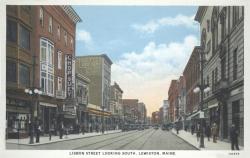
Lisbon Street, Lewiston, ca. 1935
Maine Historical Society
Likewise, in the late 20th and early years of the 21st centuries, officials have sometimes attempted to influence the nature of immigration. For instance, former Lewiston mayor Laurier T. Raymond in 2002 sought to dissuade an even greater influx of Somalis from joining their compatriots in Lewiston, stressing the city's efforts to absorb the transplants and its limited finances to do more.
Somali elders expressed their disappointment with the mayor's tactics, then stressed their legal status and the benefits their residency conferred on Lewiston: "Our presence has turned Lewiston into a multi-ethnic, multi-racial city, which has embraced diversity and change. A city of 36,000 people, in the middle of the 'whitest' state in the country has suddenly become an international city."
While some tensions remain, Somalis, Sudanese, and others have found a place in Maine, expanding the cultural repertoire of the communities where they reside.

Pleasant Street, Richmond, ca. 1920
Maine Historical Society
A surprising immigrant group made up mostly of older White Russians exiles set up a thriving community in Richmond on the Kennebec River in the 1950s. They brought with them religion (they built three Russian Orthodox churches), cultural traditions, and various businesses to support their community.
This glimpse into the peopling of Maine does not begin to capture the multiplicity of cultural and social influences that colored Maine over the years – the state even housed German prisoners of war during World War II, a few of whom stayed behind to marry into nearby communities – but it does indicate the variety of such influences, and contextualizes the census figures that provide bone, but not flesh.
Continuing the Influx
Maine's natural attributes, relatively unspoiled even now, have attracted artists and alternative life stylists of all stripes. Many arrived as part of the back-to-earth movement of the 1970s. The trend has continued in the ensuing decades. A variety of writers, organic farmers, painters, artists, and others have migrated to the state either as part-time residents or as transplants, contributing to its culture and economy.
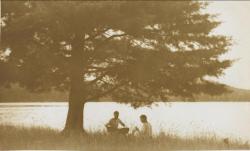
Noon Lunch, Eagle Lake, 1911
Maine Historical Society
The resort industry early in the 20th century built on visitors' interest in experiencing Maine's natural beauty. Many who visited over the years came to stay, while others became seasonal residents. People "from away" have strengthened the culture and society of Maine communities, not to mention the tax base, as they serve on school boards, start local theater companies, and contribute their expertise to towns throughout the state.
Modern day Maine has also absorbed, sometimes reluctantly, a variety of newcomers from abroad. While modest compared to the numbers entering other states, concentrations of immigrants from abroad exist in selected cities in sufficient numbers to alter the social landscape, even cause alarm among some.
The flinty New Englander – rustic, taciturn, and individualistic – occupies a notable place in American cultural sentiment as the quintessential Yankee. Maine writer Sarah Orne Jewett captured one such Maine personality in The Country of the Pointed Firs.
A newcomer to the small community was about to be introduced to an old-timer. Jewett wrote of the indirect and cautious nature of Mainers:
"This is the young lady who is stopping with Almiry this summer," he explained, and I approached as if to give the countersign. She offered her left hand with considerable dignity, but her expression never seemed to change for the better. A moment later she said that she was pleased to meet me, and I felt as if the worst were over."
The state and its peoples are far more diverse than popular perceptions or census data suggest – and diverse in more ways than census data can capture, yet diverse on a smaller scale than some communities.
Cities like Portland, Lewiston/Auburn, and Bangor host a variety of newcomers who bring fresh customs, ideas, and energy with them, and longtime residents who sustain cultural and social traditions. Rural communities similarly embrace a combination of multi-generational residents and people "from away."

Shaker group portrait, ca. 1893
United Society of Shakers
These varied strains—old and new, immigrant and long-term denizen, native and Euro-American—entwine and root Maine's past to its present. Popular location designators reflect alternate conceptual perspectives: "Down East" is a legacy of British and American shipping interests while "Dawnland" reflects Wabanaki perceptions.
Maine encapsulates both these dynamics and more. There are far more than the "two Maines" that geographic and socio-economic forces have transcribed. There are, indeed, many Maines grounded in historical encounters, coexisting alongside those that continue to emerge from a diversity of experiences.


